Blog
How Does a Condenser Coil Work?
A condenser coil is a critical component in commercial and industrial air conditioning systems, responsible for rejecting heat from the refrigerant into the external environment. As part of the refrigeration cycle, the coil helps convert hot refrigerant vapor back into liquid refrigerant so the cooling process can continue.
Understanding how a condenser coil works is important when designing, maintaining, or replacing HVAC equipment. Coil construction, airflow, refrigerant conditions, and available surface area all influence performance. A properly selected condenser coil supports efficient heat transfer, required cooling capacity, and reliable HVAC system operation.
How Do Condenser Coils Work in HVAC Systems?
So, how do condenser coils work? After leaving the compressor, hot, high-pressure refrigerant vapor enters the condenser coil. A fan moves outdoor air across the coil's tube-and-fin surfaces, allowing heat to transfer from the refrigerant to the surrounding air.
Three stages can occur as the refrigerant travels through the condenser:
- Desuperheating: Excess heat is removed from the high-temperature refrigerant vapor.
- Condensing: Continued heat rejection causes the refrigerant to change from vapor to liquid.
- Subcooling: The liquid refrigerant is cooled below its condensing temperature before continuing to the expansion device.
The high-pressure liquid refrigerant then continues through the system. This process is central to how a condenser coil works and helps maintain the cooling capacity required by the application.
Condenser Coil Construction and Components
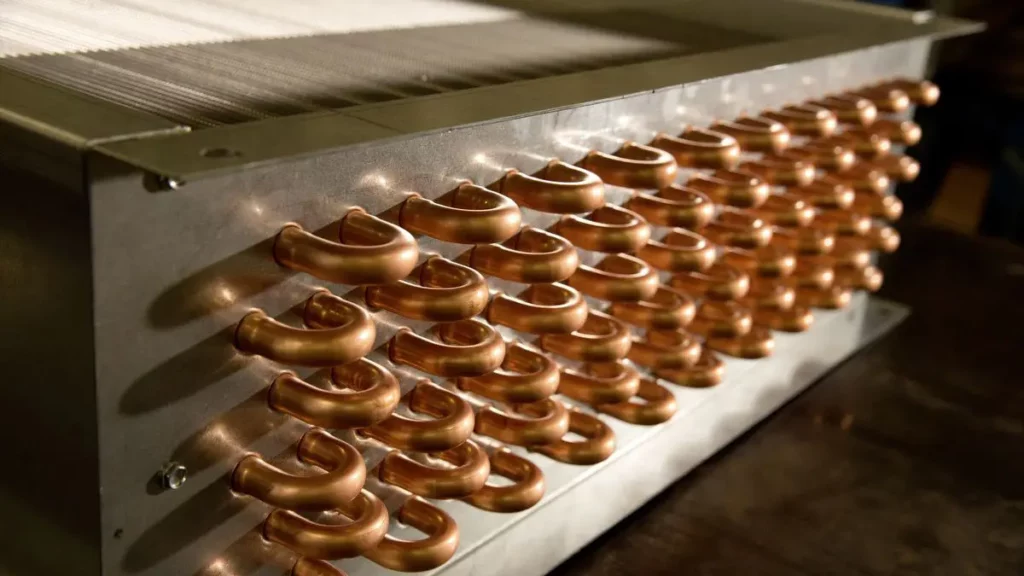
Condenser coil construction must provide sufficient surface area and refrigerant flow for efficient heat rejection. Copper tubes are commonly used to carry refrigerant, while aluminum fins increase the available surface area for heat transfer.
Headers, fittings, and connection points distribute refrigerant throughout the coil. Inlet and outlet headers may differ in size because the refrigerant enters the condenser as vapor and exits as a denser liquid.
Casing materials provide structural support, while construction options can be selected based on the operating environment. Precision Coils offers specialty fin materials, protective coatings, and stainless steel casings for applications requiring additional corrosion resistance. Custom dimensions and formed configurations can also accommodate unique equipment or installation requirements.
Condenser Coils for Commercial and Industrial HVAC Systems
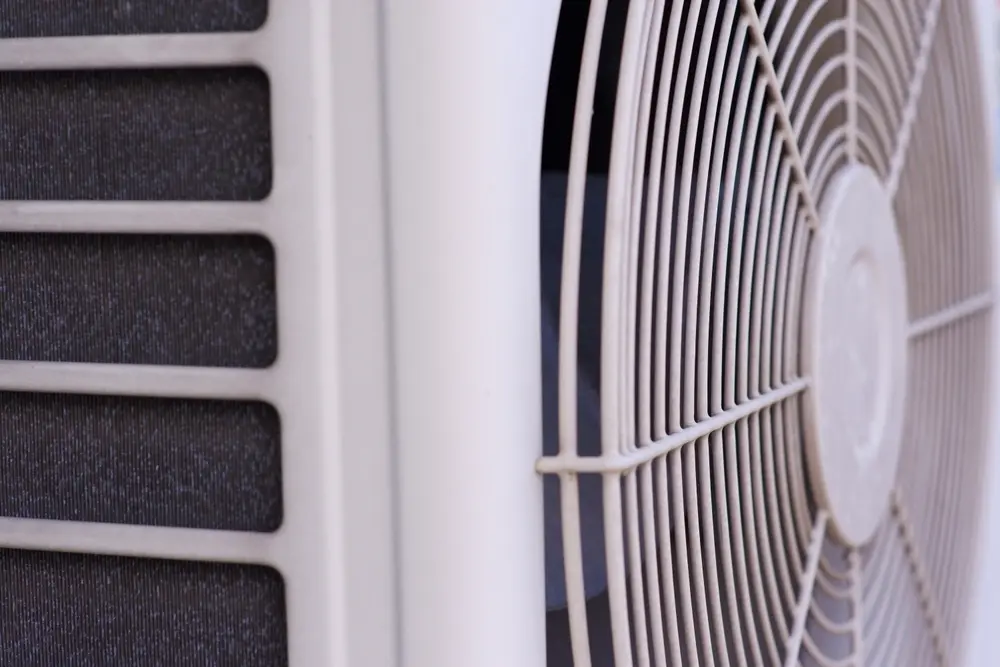
Condenser coils are used throughout commercial and industrial air conditioning systems and refrigeration equipment. Common applications include rooftop units, packaged HVAC equipment, OEM systems, and other air-cooled equipment where reliable heat rejection is required. Depending on system design, the condenser may be installed within an outdoor unit where it has access to sufficient airflow.
Commercial and industrial applications may have specific requirements for capacity, dimensions, materials, refrigerant, airflow, and operating conditions. The condenser coil must be selected and constructed accordingly.
Custom condenser coils can be manufactured for new equipment as well as replacement, retrofit, and OEM applications. Matching coil construction and performance to the HVAC system helps provide reliable operation while maintaining required cooling capacity and efficiency.
The Role of Condenser Coils in the Refrigeration Cycle
The heat exchange cycle depends on two primary processes: heat absorption and heat rejection. The evaporator coil absorbs heat from the airstream, and the refrigerant carries that heat through the system to the compressor.
After compression, the refrigerant travels to the condenser, where the heat absorbed from the conditioned space is released into the external environment. The refrigerant then passes through an expansion device before returning to the evaporator.
This continuous process of absorbing heat and rejecting it allows the HVAC system to maintain required indoor temperatures. While an evaporator coil may be installed within an air-handling unit, an air-cooled condenser is typically positioned where it can transfer heat to outdoor air.
Design Factors That Impact Condenser Coil Performance
Several design variables influence condenser coil performance. Fin density and coil surface area affect the amount of available area for heat transfer, while tube arrangement and circuiting influence refrigerant velocity, pressure drop, and overall performance.
Proper circuiting also supports oil movement through the coil. Excessive oil accumulation can interfere with heat transfer and reduce performance.
Other important considerations include:
- Airflow volume and velocity across the coil
- Refrigerant pressure and temperature
- Available equipment dimensions
- Tube, fin, casing, and coating materials
- Environmental and operating conditions
- Vertical, horizontal, or angled installation orientation
Each variable should be evaluated according to the requirements of the HVAC system. Custom coil design allows these factors to be matched to specific capacity, dimensional, and performance requirements.
Condenser Coil Maintenance and Performance
Proper maintenance helps condenser coils continue rejecting heat efficiently. Coil surfaces and airflow paths should remain clean and unobstructed, while fins, tubes, connections, and casings should be inspected for damage, corrosion, or deterioration.
Dirt and debris can restrict airflow and reduce the coil's ability to transfer heat into the surrounding air. Poor condenser performance can also increase energy consumption and place additional demands on other HVAC components.
Reduced cooling capacity, changes in system performance, or increased energy consumption may indicate that a condenser requires inspection or replacement. Coil service life varies based on construction materials, operating conditions, maintenance, environmental exposure, and system usage rather than a single expected lifespan.
Selecting Custom and Replacement Condenser Coils
Selecting a replacement or custom condenser coil starts with accurate system information. Coil dimensions must match the available equipment space, while capacity, airflow, refrigerant type, operating pressure, and temperature conditions must meet system requirements.
Tube and fin materials, casing construction, protective coatings, circuiting, connections, and installation orientation should also be considered. For retrofit projects, the new coil must integrate properly with existing HVAC equipment.
Coil selection software can simplify this process by matching construction and performance requirements to the application. Project schedules should also be considered, particularly when an unexpected coil failure creates an urgent replacement need.
Custom Condenser Coils from Precision Coils
Precision Coils manufactures a complete line of custom-built condenser coils for replacement, retrofit, OEM, and new equipment applications. Coils can be manufactured to customers' precise dimensions and material preferences, including specialty fin materials, protective coatings, and stainless steel casing options.
PC Select, Precision Coils' industry-leading coil selection software, helps customers configure and select coils based on specific dimensional and performance requirements. Precision Coils also operates multiple manufacturing facilities strategically located throughout the U.S., providing production flexibility and fast standard and expedited lead times.
Precision Coils' condenser and evaporator coils are recognized as ANSI/UL 1995 and CAN/CSA C22.2 compliant. When combined with responsive engineering, sales, and customer service support, these capabilities help customers quickly and reliably get the right coil for their application.
Request a Custom Condenser Coil
Whether you need a condenser coil for a new system, an OEM application, a retrofit, or an urgent replacement, Precision Coils can manufacture a solution to meet your exact specifications and performance requirements.
Contact Precision Coils to request a quote or receive assistance selecting the appropriate coil for your HVAC system. Customers can also use PC Select for quick and accurate coil selection. With custom manufacturing capabilities and expedited lead-time options, Precision Coils can help keep your next project moving.