
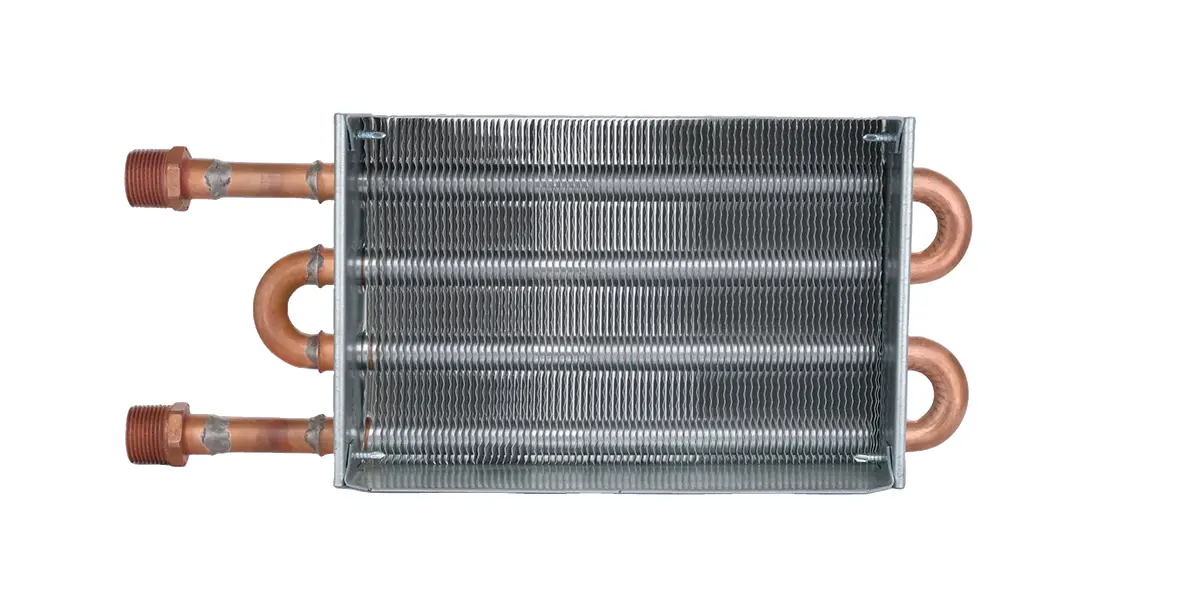
Duct-Mounted Booster Coils
Duct-Mounted Coils for Targeted Temperature Control
Booster Coils, often referred to as duct-mounted coils, are heat exchangers installed directly into ductwork. This installation method delivers targeted temperature control to heat or cool specific areas for greater comfort and energy efficiency. Precision Coils manufactures coil boosters in either hot water, steam, or chilled water configurations, and we’re happy to help you determine which type of coil is right for your HVAC system.
Booster Coil Specifications
Precision Coils sells a variety of booster coils available with the following specifications:
- 66 Standard 1- and 2-row sizes.
- Available in 30 sizes with both 1- and 2-row headers.
- 5/8″ Outer Diameter copper tubes with .020 wall staggered tube pattern.
- 6 – 14 fins per inch (FPI).
- 16-gauge galvanized steel casings with 1″ flanges on the end plates and side plates.
- All coils are leak tested under water at 450 PSIG dry nitrogen.
- All coils are built to ARI-410 standards.
- All coils suitable for steam up to 5 PSI.
Non-Standard FPI – 1 & 2 Row Coils
- 10 FPI – Add 5%
- 12 FPI – Add 8%
- 14 FPI – Add 10%
Contact Factory for Lead Times
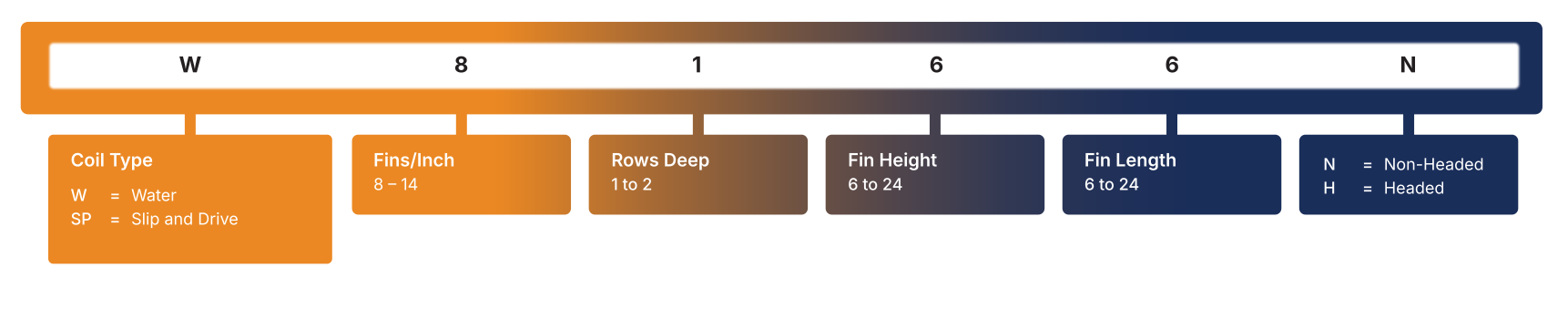
Direct Order Entry in PC Select
Precision Coils products can be purchased directly from PC Select using Direct Order Entry (DOE). DOE offers accelerated order processing and faster access to order acknowledgements, sales order numbers, and estimated ship dates to complete projects efficiently. Contact your sales representative to set up an account.
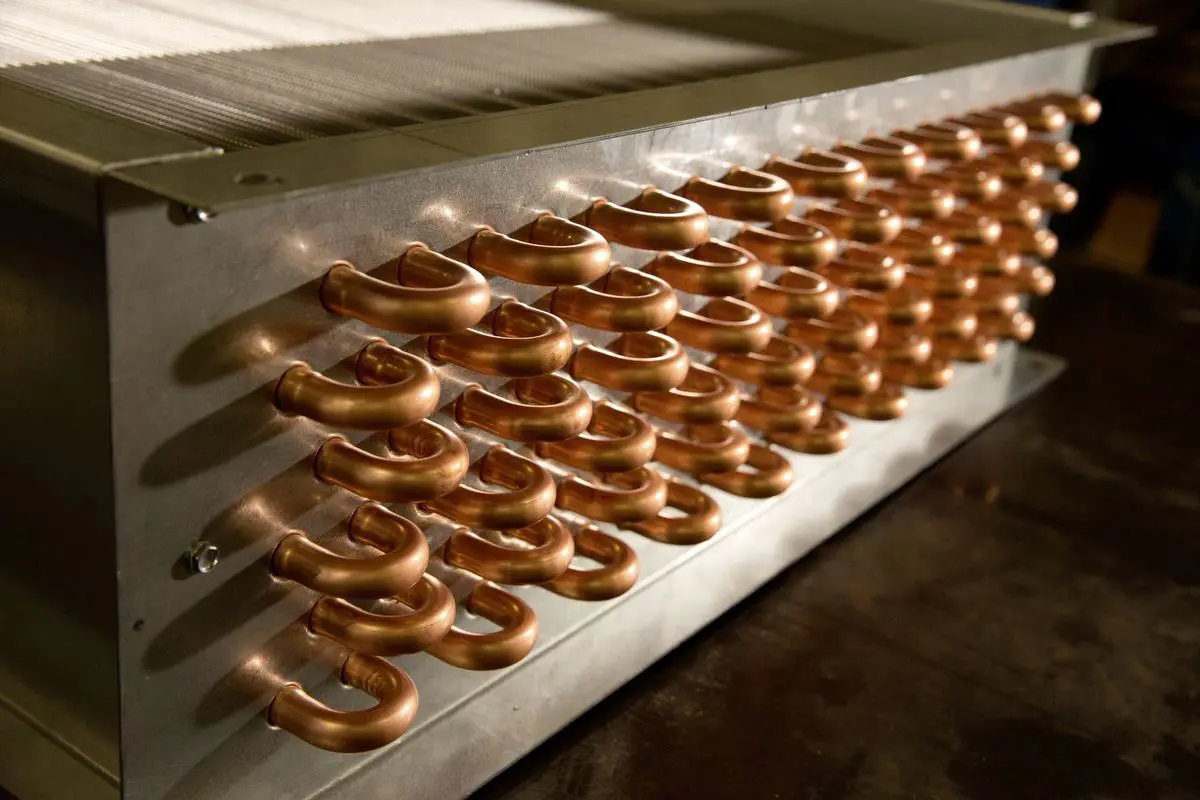
Applications for Duct-Mounted Booster Coils
Due to their zoned temperature control capabilities, booster coils are most often used in spaces with fluctuating occupancy or areas requiring a steady, precise temperature. Some of these applications include:
- Offices
- Hospitals
- Laboratories
- Retail Stores
- Manufacturing Facilities
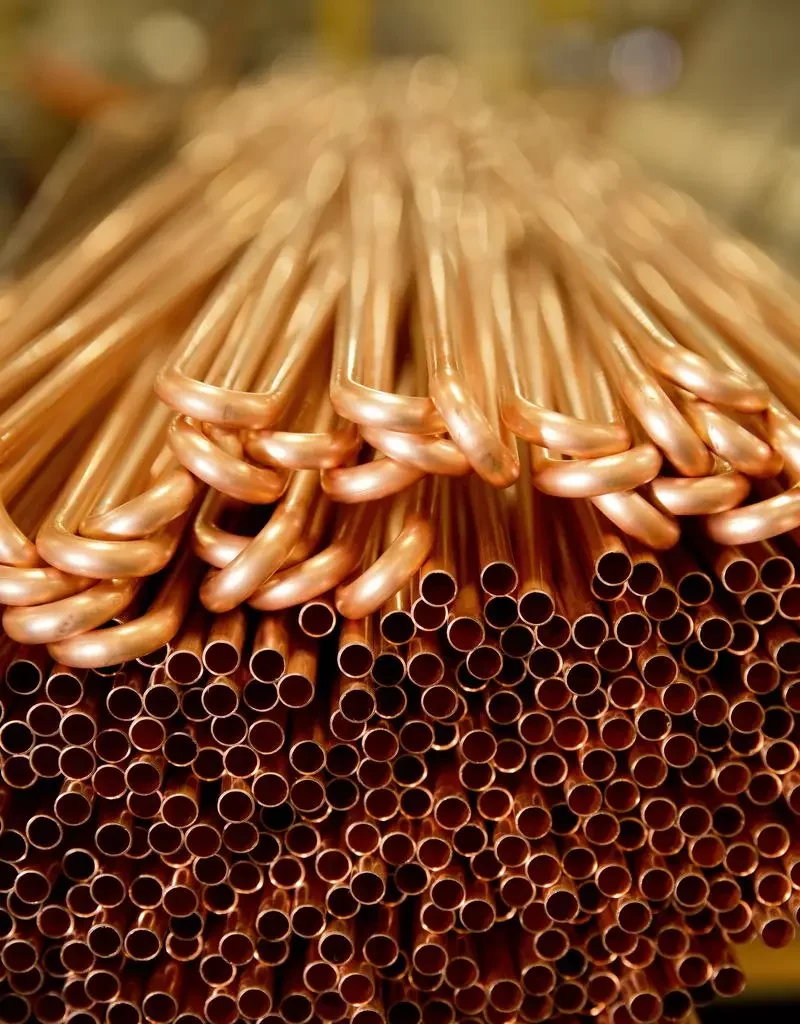
Benefits of Booster/Duct-Mounted Coils
- Zoned Temperature Control: Hot water booster coils are ideal for spaces that vary in their heating and cooling needs, and zoned temperature control helps maintain comfort in all areas of the property.
- Energy Efficiency: By only cooling air where necessary, duct-mounted cooling coils reduce energy costs and reduce the load on central HVAC systems.
- Compact Construction: Coil boosters’ small size allows them to easily fit into ductwork, making them well-suited for retrofit projects with limited space.
Throughout our 25 years in business, Precision Coils has never wavered in our commitment to providing exceptional service to our customers and partners. That commitment and our dedication to manufacturing high-quality coils are reflected through the numerous customization options available for our booster coils. Let our team help you design the coil booster that perfectly fits your HVAC needs.
How Booster Coils Integrate Into HVAC Systems
Installed within duct systems, booster coils provide localized heating or cooling where the central HVAC system requires additional capacity. Placement at the duct level allows these coils to address temperature imbalances and improve temperature control in specific areas. Retrofit applications commonly use booster coils when existing HVAC equipment cannot be easily modified. Available in hot water coil, steam, or chilled water coil configurations, each booster coil functions as a heat exchanger. Water or steam circulates through the coil to transfer heat to or from the air stream. This method allows targeted temperature control without increasing the load on the central HVAC system.
Construction and Material Options
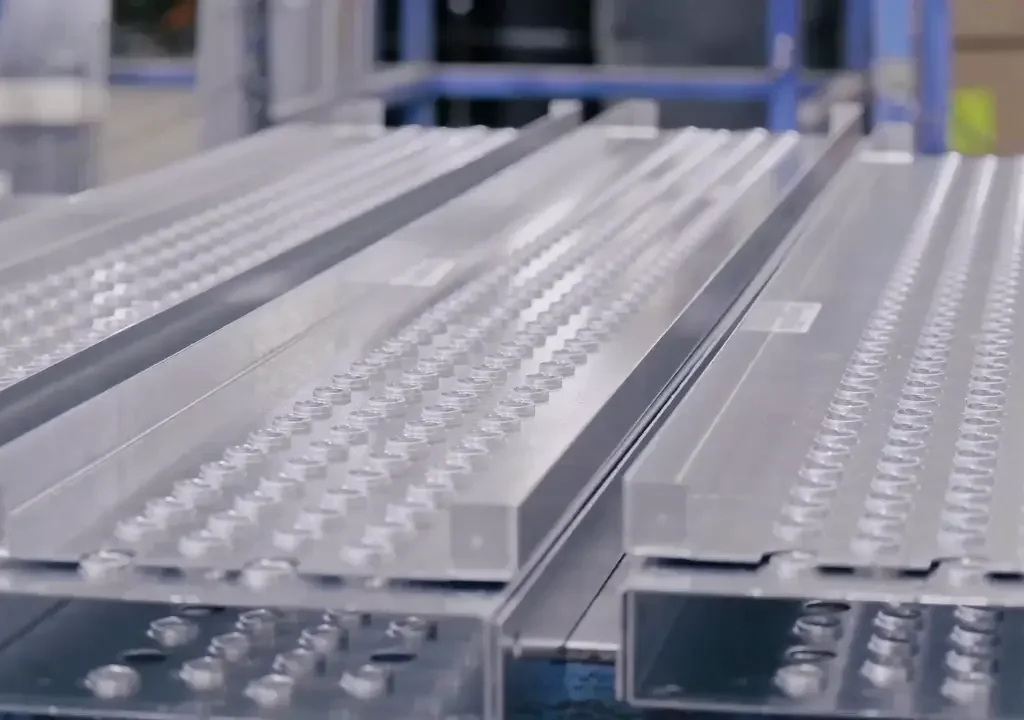
Copper tubes and aluminum fins are used in booster coils to support efficient heat transfer and durability. Standard construction includes galvanized steel casing material with flanged connections for installation in duct systems. For applications requiring additional corrosion resistance, stainless steel casings are available. Protective coating options can also be applied for use in more demanding environments. Material selection is based on operating conditions, air quality, and system requirements. These options allow each coil to maintain consistent performance and structural integrity across a range of HVAC system applications.
Performance and Sizing Considerations
Several design factors determine booster coil performance, including rows, fins per inch (FPI), airflow velocity, and entering water or steam temperature. Increasing rows or FPI improves heat transfer but may also increase airside pressure drop. Proper airflow must be maintained to match the coil design and prevent system restrictions within the duct. Water flow rate and temperature, along with steam conditions, directly impact coil capacity. Selection should be based on system requirements to maintain acceptable pressure drop and airflow. Correct sizing supports consistent heating or cooling and reliable operation within the HVAC system.
Customization for OEM and Retrofit Applications
Custom configurations allow booster coils to meet exact specifications for OEM and retrofit applications. Coil dimensions, casing configuration, and connection options can be adjusted to fit existing duct systems or new HVAC unit designs. This flexibility is important in retrofit projects with limited space or unique duct layouts. Precision Coils works with customers to provide solutions that align with system requirements and installation conditions.
Common Commercial Applications
A wide range of commercial environments use booster coils where targeted heating or cooling is required. Offices address uneven temperatures within duct systems, while healthcare and laboratory environments maintain controlled conditions. Schools and universities rely on booster coils for consistent comfort in classrooms and common areas. Retail environments use duct-mounted coils to support stable indoor conditions. Manufacturing facilities also use booster coils for localized temperature control.
Right Fit. Right Now.