Condenser Coils
Condenser Coils for Heat Exchange
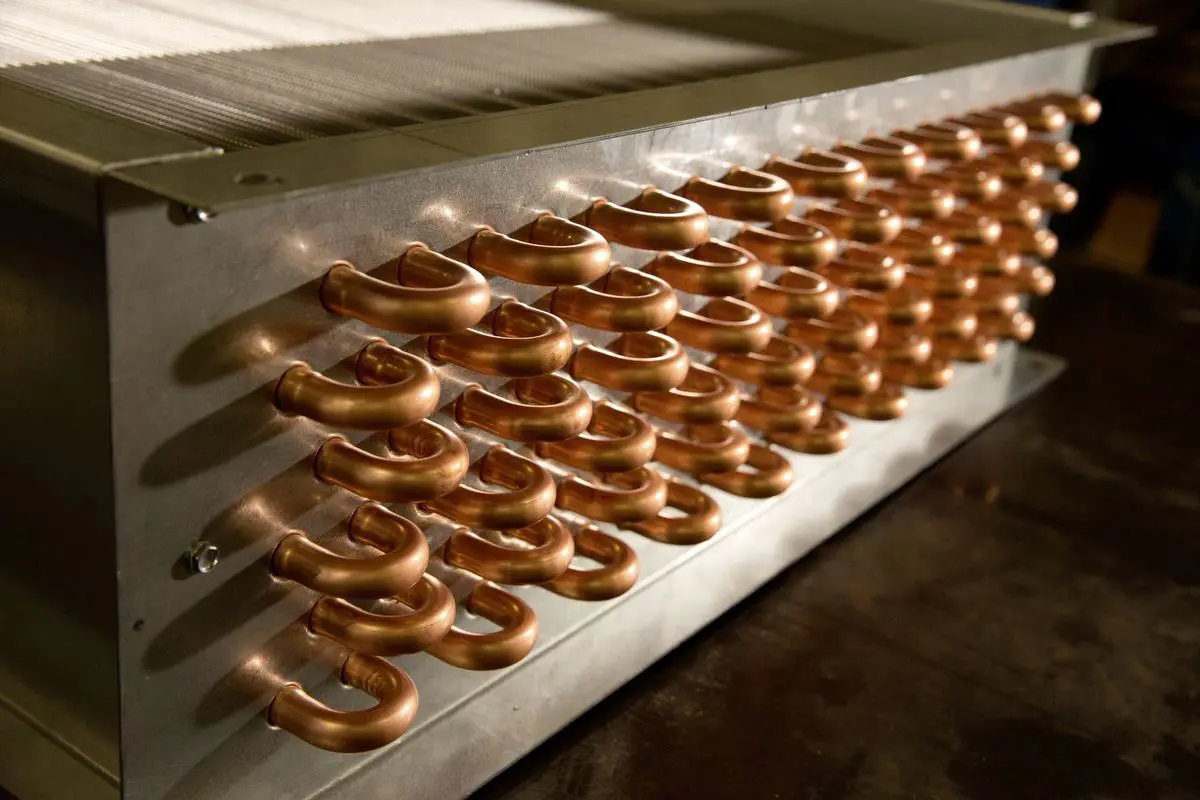
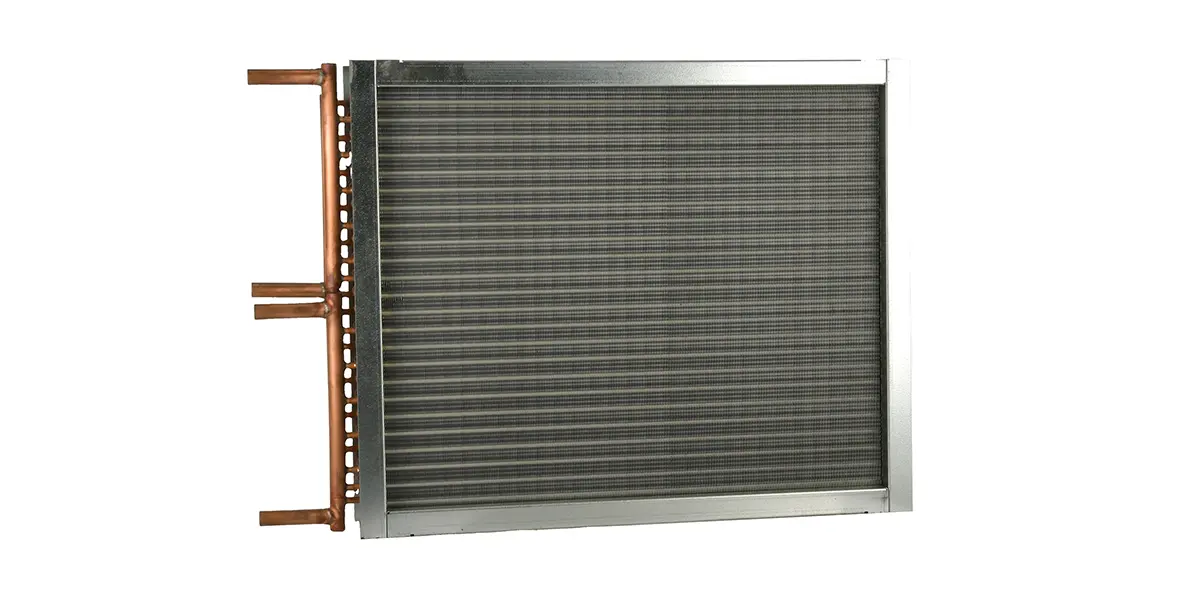
Condenser coils are crucial components for refrigeration and air conditioning systems. Condenser coils serve as heat exchangers to release heat from the coil refrigerant into the surrounding air, helping your HVAC/R system maintain cool temperatures. Precision Coils’ depth of expertise helps customers design custom condenser coils with maximized surface area for efficient heat exchange.
Condenser Coil Specifications
Selecting the right condenser coils can be a daunting task, which is why Precision Coils works with customers to optimize coil designs for improved HVAC/R system efficiency and prevent costly mistakes. Some of the most important specifications to consider for custom condenser coils are listed below:
- Capacity Requirements: Knowing the cooling capacity of your HVAC/R system is necessary to select the proper size coil for improved cooling.
- Refrigerant Type: HVAC/R systems utilize different types of refrigerants, and condenser coils must be compatible with the same refrigerant to prevent leaks or chemical reactions.
- Materials and Construction: Condenser coils usually feature copper tubes and aluminum fins, but all copper coils or those built with stainless steel casings offer greater corrosion resistance.
- Compliance: Condenser coils must meet local building codes, as well as industry standards and environmental regulations for the use of refrigerant.
Direct Order Entry in PC Select
Precision Coils products can be purchased directly from PC Select using Direct Order Entry (DOE). DOE offers accelerated order processing and faster access to order acknowledgements, sales order numbers, and estimated ship dates to complete projects efficiently. Contact your sales representative to set up an account.

Types of Condenser Coils and their Applications
Different types of condenser coils have specific HVAC/R applications:
Air-Cooled Condenser Coils
Used for residential and commercial HVAC/R systems, air-cooled condenser coils use ambient air to remove heat. These coils utilize a simple design that’s appropriate for small to moderate cooling loads.
Water-Cooled Condenser Coils
Water-cooled condenser coils use water rather than air to remove heat and are often incorporated in HVAC/R systems for larger commercial or industrial facilities. Water-cooled condenser coils maintain efficiency even in tight spaces with limited airflow.
Benefits of Condenser Coils
- Energy Savings: Efficient heat exchange from HVAC/R condenser coils reduces energy costs to keep your space cool.
- System Longevity: Properly engineered coils protect compressors and other important components of HVAC/R systems.
- Enhanced Cooling: Condenser coils help maintain comfortable temperatures throughout the warmer months.
- Eco-Friendly Operation: Most modern refrigeration condenser coils are constructed to use less refrigerant to meet more rigorous environmental standards.
Role of Condenser Coils in the Refrigeration Cycle
Condenser coils are essential heat exchangers in refrigeration and HVAC/R systems. Their primary role is to convert high-temperature, high-pressure gaseous refrigerant into a liquid by releasing absorbed heat into the outside environment. This process cools the refrigerant, enabling it to restart the cooling cycle. Heat rejection is the process in the condenser coil where high-pressure, vaporized refrigerant releases absorbed indoor heat to the outdoor environment, changing state into a high-pressure liquid. By effectively transferring heat away from the system, condenser coils ensure high energy efficiency and optimal, reliable performance.
Air Cooled vs Water Cooled Designs
Air-cooled designs use condenser coils, fans, and heat sinks to dissipate heat into the air, offering simple, affordable, and low-maintenance cooling. An air-cooling coil uses a simple design that is appropriate for smaller, budget-friendly, or moderate cooling loads. Water-cooled designs use a chilled water coil instead of air to transfer heat to a radiator, offering superior thermal capacity, efficiency, and quieter operation. Water cooling excels in high-performance computing, large industrial HVAC/R systems, or high-density environments.
Engineering for Heat Rejection Efficiency
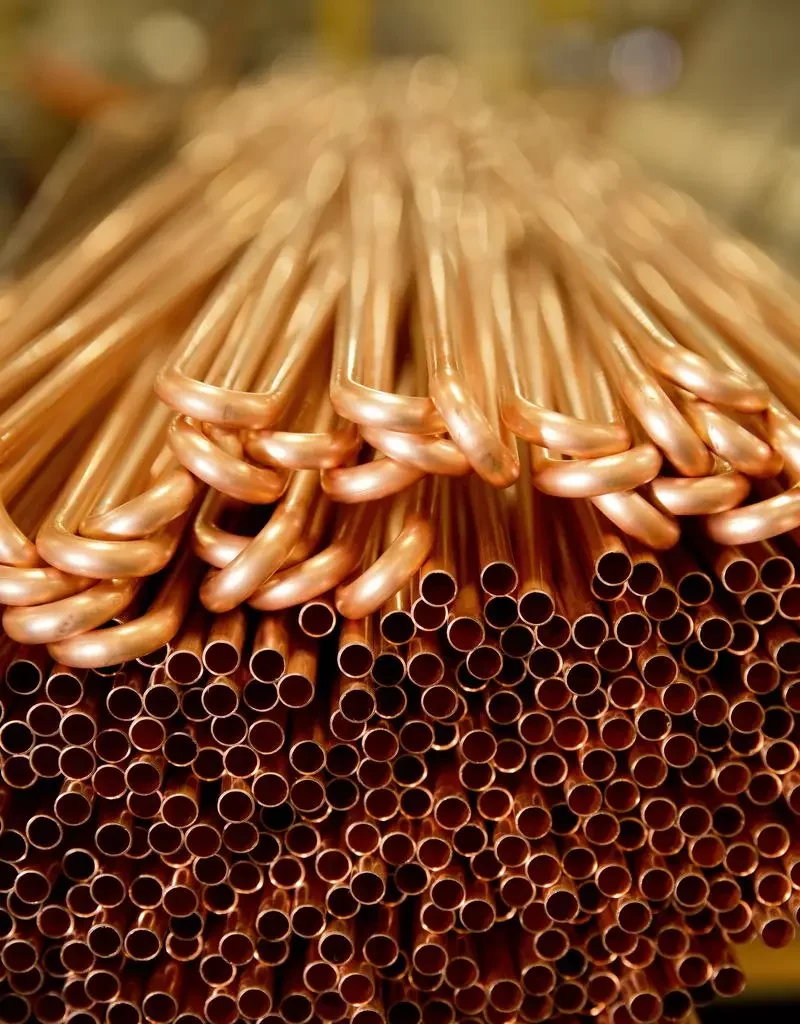
Engineering condenser coils for heat rejection efficiency involve optimizing the materials used in the condenser coil. Generally, copper tubes are used for condenser coils as they quickly transfer heat.
Aluminum is used for the coil fins, as it provides excellent heat dissipation across the finned surface.
Increasing fin density, while maintaining uniform airflow distribution, increases the available heat transfer surface area for convection and will boost heat dissipation rates. The number of condenser coil tube rows will determine the path length air or fluid travels through the exchanger. Increasing tube rows will increase the total heat transfer and allow for greater temperature change. Using smaller tubing also allows for improved heat transfer, especially with modern refrigerants.
Durability and Corrosion Protection
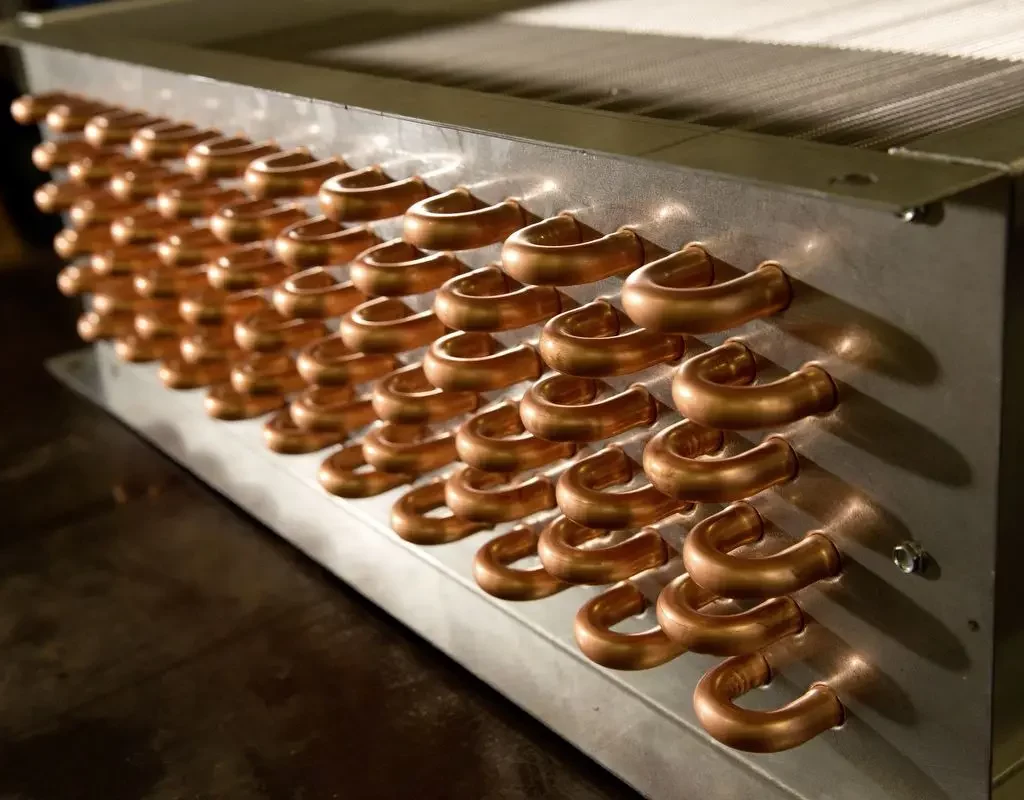
HVAC systems require durable materials, such as powder-coated aluminum, galvanized steel, or stainless steel, to withstand corrosion. Snow, ice, salt, and water can erode and ruin outdoor HVAC/R systems. Many times, polyurethane coatings are applied to metal housings, tubes, and coils to protect the condenser coils, evaporator coils, blower, and compressor.
Maintenance and Performance Optimization
Essential HVAC/R system maintenance includes changing filters every 1–3 months, cleaning condenser coils annually, and clearing evaporator coil drain lines to prevent water damage. Professional inspections should occur annually to check the refrigerant levels, electrical connections, and blower motor.
Like all our products, condenser coils from Precision Coils are built for high performance and durability, even under varying weather and operating conditions. The engineers at Precision Coils can help customers consider all the factors necessary for selecting the correct condenser coils, heating coils, HVAC coils, and booster coils.
We are your condenser coil manufacturer and can help optimize your HVAC/R system with replacement coils for long-term performance, reliability, and efficiency.
Right Fit. Right Now.