Blog
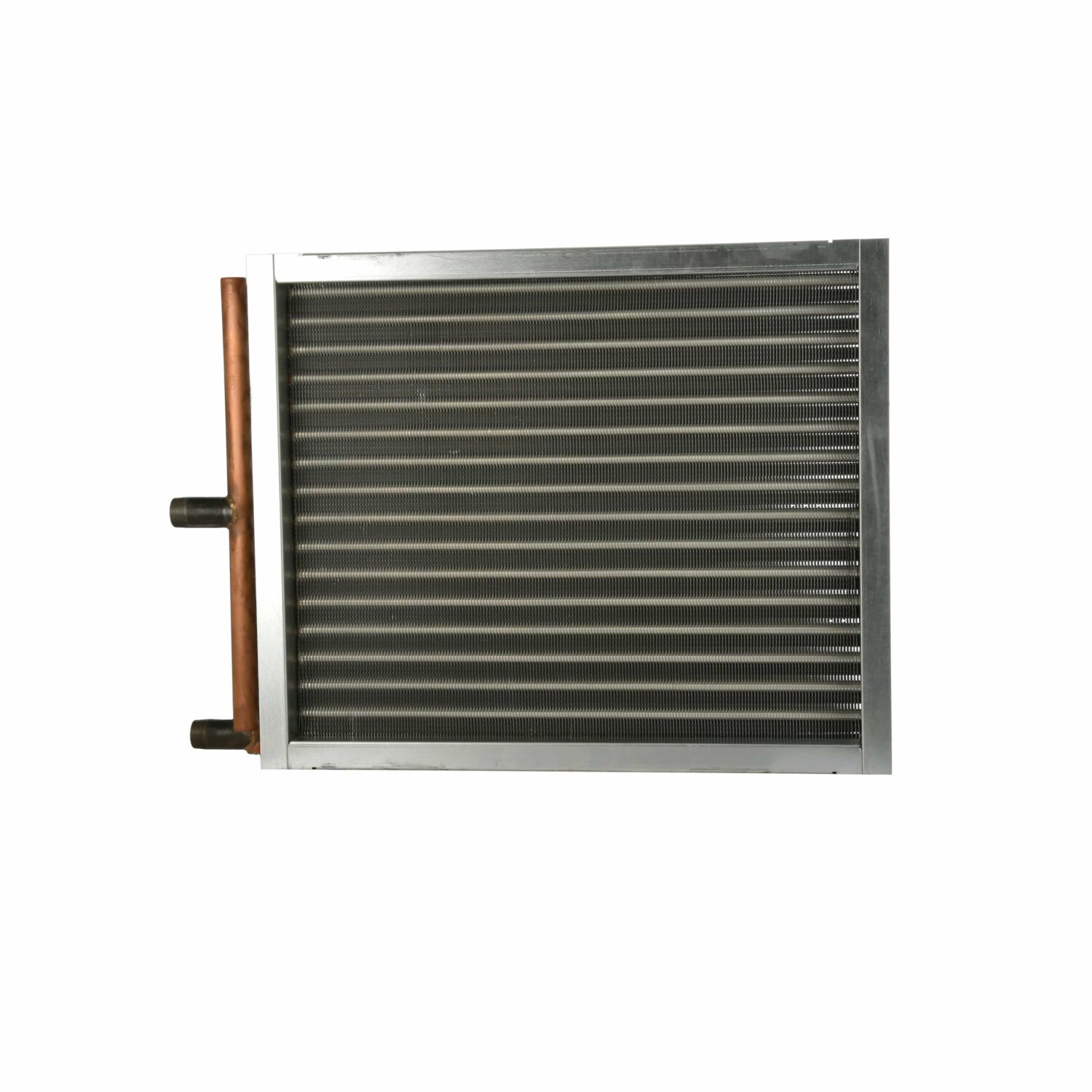
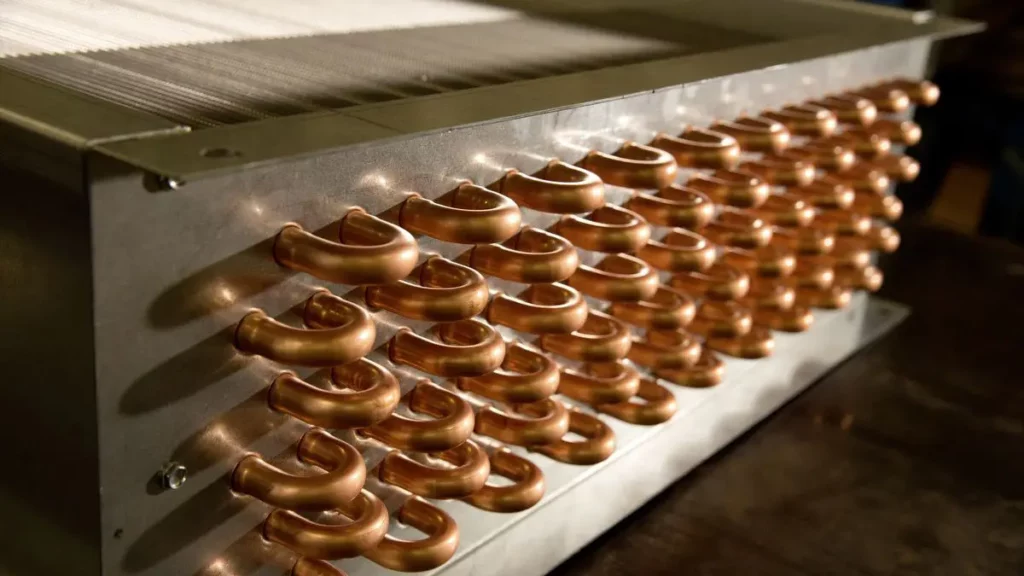
How do steam coils work inside of an air-handling unit? Steam enters the tubes, releases latent heat as it condenses, then leaves as liquid condensate. Air moving across the finned face picks that energy up by convection.
Steam Coils as Heat Exchangers
Steam coils are steam-to-air heat exchangers in air-handling units, makeup-air systems, ducts, and process equipment. They’re suited for jobs ranging from space heating and outdoor-air preheating to drying and other industrial processes.
Inside the tubes, steam and condensate can coexist. During the two-phase flow, steam releases substantial latent heat as it changes back to water with little temperature change. That gives a compact steam coil plenty of heating capacity, but of course, whole-system efficiency still comes down to the boiler and distribution losses.
How Steam Coils Work: Heat Transfer Basics
Control valves meter steam into the coil to regulate the leaving-air temperature. When the steam contacts the cooler tube walls, it condenses. Heat travels through the tubes and fins, then into passing air. Additional fin surface can boost performance, but tighter spacing raises air resistance and makes cleaning more challenging.
Condensate flows to the return connection. A backup reduces the effective heating surface, while slugs of water strike fittings or valves, causing water hammer.
Steam Coil & System Components
The main components each have their own job:
- Tubes carry steam and condensate while conducting heat to the fins.
- Fins expand the air-side surface area, helping the coil heat air.
- Headers and connections distribute steam and collect condensate. Their placement is dependent on circuiting and fit.
- Steam traps discharge condensate while limiting live-steam loss. Vacuum breakers admit air when pressure falls, while vents release noncondensable gases.
- Casing and mounting flanges support the fin pack inside the unit or duct.
Steam-Distributing Coils vs. a Standard Steam Coil
A standard steam coil sends steam through conventional tubes, where it then condenses and drains to the return. It’s a straightforward and cost-efficient choice when freezing air isn’t a concern.
Steam distributing coils have a tube-in-tube design where steam travels through an inner tube and feeds the outer finned tube along its length, promoting even distribution across the coil face. While this type of design lowers freeze risk in outdoor-air service, no coil is truly freeze-proof. Additionally, controls, airflow, trapping, and drainage must always be accounted for.
Single-Pass, Multi-Pass, and Circuiting
In single-pass coils, steam travels from the inlet header to a condensate header without reversing through return bends. This drainable layout is typical in one- or two-row coils.
A multi-pass coil uses return bends to route flow through multiple paths, often placing both connections on the same end.
Tandem designs route steam through rows in sequence when a single row can’t meet the load. Some manufacturers use Type T for opposite-end connections and Type P for same-end connections with distribution tubes; labels vary, so confirm the circuit before specifying.
Coil Design Considerations
Start with a focus on capacity, air temperatures, airflow, steam pressure, and face area. Many low-pressure HVAC systems operate around 5 to 15 psig, but the coil has to match the actual conditions. Face velocity impacts pressure drop and heat transfer, while tube diameter, row count, and fin spacing shape capacity, drainage, and cleanability.
Additional rows and tighter fin spacing can increase heat-transfer surface area, but they may also increase air-pressure drop and make the coil more susceptible to fouling. Longer coil length calls for careful support, pitch, distribution, and condensate management.
Material Options for Steam Coil Tubes and Fins
Copper tubes featuring aluminum fins are common, trusted to transfer heat well at a practical cost. Stainless steel or other specialty materials may be considered for corrosive environments, demanding cleaning requirements, or other specialized operating conditions. Copper fins and protective coatings offer a wider range of options.
Always match materials to the pressure, temperature, contaminants, condensate chemistry, and service-life goals. Custom alloys, tube walls, fin thicknesses, casings, and coatings are available when standard construction won’t get it done.
Installation, Drainage, and Freeze Protection
Carefully follow the submittal and manufacturer instructions. Precision Coils calls for coils without factory pitch to slope 1/4 inch per foot toward the return. Size the trap for the load and pressure differential, then place it below the return. Don’t reduce the return pipe or try to lift condensate without a pump.
As specified, use air vents and vacuum breakers, and add a freeze-stat where cold outdoor air can reach the coil. Dirty fins, failed dampers, low steam pressure, and poor drainage are all known to contribute to freezing.
Sizing, Performance, and Replacement Tips
Replacing a coil? Record its casing and fin dimensions, connections, tube diameter, rows, fins per inch, airflow direction, and removal clearance; photos and a completed coil dimension worksheet prevent costly fit surprises.
Refer to AHRI Standard 410 ratings when the coil falls within the program’s scope. PC Select can help you select, price, and order coils.
Common Failures and Maintenance Actions
Closely inspect the tubes, headers, joints, and casings for corrosion or leaks. Clean and straighten the fins, then test valves, traps, vents, dampers, and freeze safeties on a regular basis. Water hammer, uneven temperatures, slow warm-up, and condensate backup all deserve prompt attention.
How Precision Coils Helps
Precision Coils crafts custom replacement, OEM, and design-build coils. PC Select and available Quick Build options can help expedite urgent replacement projects. Quick Build availability and lead times are shown in PC Select and are subject to factory capacity and approval. Coils are submerged and tested with dry nitrogen ahead of shipment.
Get the Right Steam Coil for the Job
Planning a replacement or grappling with an emergency? Request a quote from Precision Coils today. Share your operating data, measurements, photos, and connection details so we can identify the right construction and turnaround option for you.