Blog
Heating coils play an important role in commercial and industrial HVAC systems by transferring thermal energy to the air moving through the system. Depending on the application, a heating coil may use hot water or steam as the heat-transfer medium. The right design helps the HVAC system maintain the required air temperature while meeting airflow and space requirements.
Understanding the different types of heating coils can make it easier to select the right option for a new system, replacement, or retrofit. Hot water, standard steam, non-freeze steam distributing, and booster coils each provide distinct advantages based on the heating source, operating environment, and HVAC system design.
What Are the Different Types of Heating Coils?
Heating coils can be categorized by their heat-transfer medium, construction, and location within an HVAC system. Four common options for commercial and industrial applications include hot water coils, standard steam coils, non-freeze steam distributing coils, and booster or duct-mounted coils.
Hot water and steam coils transfer heat from a fluid or vapor traveling through tubing to air passing across the coil fins. Booster coils can use hot water or steam for heating but are configured for installation directly within ductwork. Choosing between these heating coils requires consideration of the available heating source, required capacity, system configuration, and operating environment.
Hot Water Heating Coils
Hot water heating coils use heated water as the heat-transfer medium. Water circulates through the tubes while air passes over the coil’s fins. Heat moves from the water through the tubes and fins to increase the temperature of the air stream.
These heating coils are used in commercial and industrial hydronic HVAC systems where hot water is available. Their size and construction can vary considerably according to the application’s performance requirements. Precision Coils manufactures hot water coils with one to 12 rows and offers several tube diameters and fin configurations.
Selecting a hot water coil requires information about entering water temperature, water flow, airflow, and the desired leaving-air temperature. Coil dimensions, rows, fins per inch (FPI), and tube and fin materials also affect the final design. Matching these specifications to the HVAC system helps the coil provide the required heat transfer without creating unnecessary airflow restrictions.
Standard Steam Heating Coils
Steam heating coils use steam to raise the temperature of air passing through an HVAC system. Steam enters the coil, transfers heat as it condenses, and leaves as condensate. This process allows steam coils to transfer heat efficiently in applications where steam is already available.
Standard steam coils can be used in air-handling units, makeup air units, duct systems, and industrial process heating applications. They are generally suited for environments where freezing temperatures are not a significant concern.
Steam pressure, temperature, airflow, coil dimensions, and construction should all be considered when selecting these heating coils. Proper condensate removal is also important.
Condensate that accumulates within a coil can reduce heat transfer and contribute to water hammer or freezing when exposed to below-freezing air. Steam traps and piping should therefore be configured to support effective drainage.
Non-Freeze Steam Distributing Coils
Some HVAC systems require steam heating while operating in areas exposed to low ambient temperatures. Non-freeze steam distributing coils are designed for these demanding conditions and provide additional freeze protection compared with standard steam coils.
A steam distributing coil uses a tube-within-a-tube configuration that helps distribute steam throughout the coil. Maintaining steam distribution and properly removing condensate can reduce the risk of condensate freezing within the tubes. However, the “non-freeze” designation does not mean the coil cannot freeze. Appropriate system controls and freeze protection remain important when temperatures may fall below freezing.
These heating coils are commonly used in outdoor air systems, makeup air units, industrial ventilation systems, and other commercial or industrial HVAC applications exposed to cold conditions. Steam pressure, airflow, dimensions, materials, and condensate removal requirements should be evaluated when selecting a steam distributing coil.
Booster and Duct-Mounted Heating Coils
Booster coils, also called duct-mounted coils, are installed directly within HVAC ductwork to provide additional heating where needed. They are available in several configurations, including hot water and low-pressure steam for heating applications.
Their compact design can make booster coils useful when a particular area requires additional heat or has different temperature requirements from the rest of a building. They can also be well suited for retrofit projects where modifying the central HVAC equipment would be difficult.
Booster coil performance depends on factors such as airflow, rows, FPI, and entering water or steam conditions. The coil should be sized to provide the necessary heating capacity while maintaining appropriate airflow and pressure drop through the duct system.
How to Choose the Right Type of Heating Coil
Choosing among the different types of heating coils starts with understanding the HVAC system and its required performance. The available heat source will help determine whether hot water or steam is appropriate, but several additional factors affect coil design.
Important specifications to consider include:
- Entering and leaving air conditions
- Airflow and required heating capacity
- Hot water or steam operating conditions
- Available installation space and coil dimensions
- Number of rows and fins per inch
- Tube, fin, and casing materials
- Connection sizes and locations
- Environmental and corrosion conditions
- Potential exposure to freezing temperatures
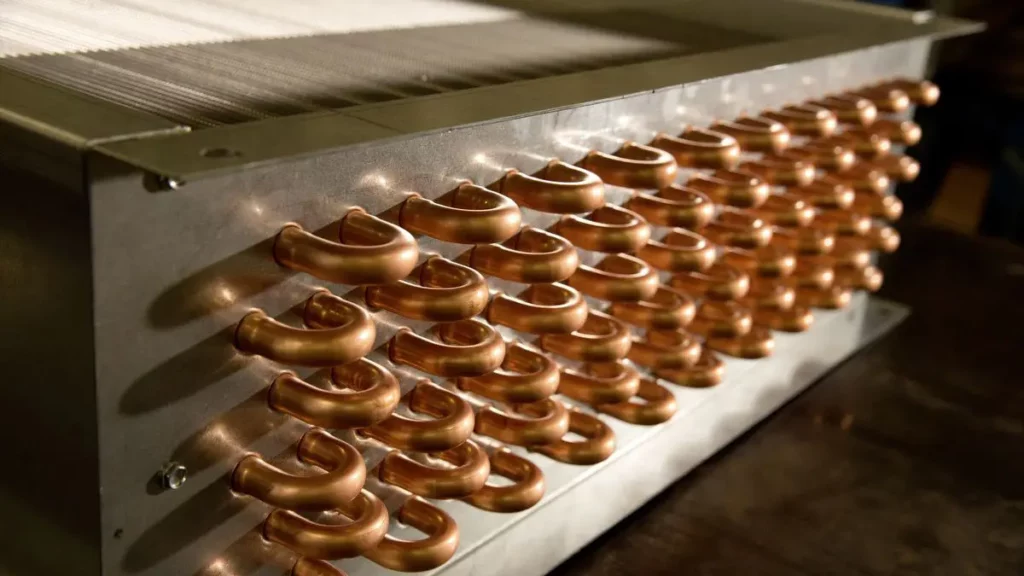
Material selection is particularly important when a heating coil will be exposed to corrosive or other challenging operating conditions. Copper tubing and aluminum fins are commonly used for HVAC heat transfer, while options such as copper fins, stainless steel casings, special fin materials, and protective coatings can address specific system or environmental requirements.
Accurate measurements are equally important for replacement heating coils. Existing coil dimensions, connection locations, operating conditions, drawings, and other specifications can help determine the correct replacement configuration.
Custom Heating Coils From Precision Coils
Precision Coils manufactures standard and custom-built HVAC/R coils for replacement, OEM, and design-build applications. Heating coils can be manufactured to meet specific dimensional, material, connection, and performance requirements, helping customers find a solution that fits their existing equipment or new HVAC system.
Customers can also use PC Select, Precision Coils’ coil selection and pricing software, to select and design coils. Direct Order Entry (DOE) within PC Select allows customers to place orders and receive faster access to order acknowledgements, sales order numbers, and estimated ship dates.
For projects with tight schedules, Precision Coils also offers Quick Build options for eligible orders. Availability and turnaround depend on the coil specifications and project requirements.
Whether you need hot water, steam, non-freeze steam distributing, or duct-mounted heating coils, providing accurate specifications from the beginning can help streamline coil selection and manufacturing. Contact Precision Coils with your coil specifications, dimensions, drawings, operating conditions, and project timeline to request a custom quote.