Blog
What are HVAC coils, and why are they essential to commercial heating and cooling equipment? HVAC coils are heat exchangers that transfer thermal energy between moving air and a circulating fluid. Depending on the system, that fluid may be refrigerant, chilled water, hot water, or steam. Coils help regulate supply air temperature in offices, hospitals, schools, manufacturing facilities, and other buildings with demanding environmental requirements.
For engineers, mechanical contractors, and equipment manufacturers, understanding the different HVAC coil types makes it easier to identify the right component for a particular system. Each design serves a distinct purpose, from absorbing indoor heat to providing supplemental warmth.
How Do HVAC Coils Work?
Most finned tube HVAC coils contain passages that carry a working fluid and extended surfaces that contact an airstream. As air moves across the coil, heat travels from the warmer medium toward the cooler one. The direction of that transfer determines whether the equipment heats or cools the air.
In cooling applications, a sufficiently cold coil surface can also cause moisture in humid air to condense. The resulting water must be collected and drained through the equipment's condensate management system. Heating coils raise air temperature without performing that moisture removal function.
What Are the Different Types of HVAC Coils?
Commercial HVAC equipment uses several coil categories, each designed around a particular source of heating or cooling. Understanding the roles of different HVAC coil products helps distinguish components that may look similar but cannot simply replace one another.
Cooling Coils
- DX evaporator coils: In direct expansion systems, refrigerant absorbs heat from passing air as it evaporates inside the coil. These assemblies are commonly integrated into packaged units and air handling equipment.
- Chilled water coils: Water supplied by a central chiller absorbs heat from the air. These coils are common where multiple air handlers share a centralized cooling plant.
- Condenser coils: Refrigerant releases heat through a condenser, typically to outdoor air. This component serves the heat rejection side of a refrigeration system rather than directly cooling supply air.
Heating Coils
- Hot water coils: Circulating heated water warms the air passing through an air handler or duct assembly. They operate as part of a hydronic heating system.
- Standard steam coils: Steam delivers thermal energy to the coil, where it transfers heat to an airstream. These designs suit equipment supplied by an appropriate steam system.
- Non-freeze steam distributing coils: Specialized steam distribution arrangements help reduce freezing concerns in applications exposed to low entering air temperatures, provided the complete system is properly designed. Despite the name, steam distributing coils can still freeze if the system is improperly designed or operated.
Specialized HVAC Coils
- Booster coils: Installed in ducts or other designated locations, these provide additional heating where the central air supply alone does not meet local requirements.
- Heat reclaim coils: These assemblies capture usable thermal energy from a source within a system for another heating purpose.
- Hot gas reheat coils: Refrigerant heat is used to warm air after cooling, supporting temperature control in certain humidity management applications.
Where Are HVAC Coils Installed?
Coil placement depends on the equipment layout and the task the component performs. A large commercial air handling unit may contain separate heating and cooling sections, with access panels, drain pans, and service clearances arranged around them. Packaged rooftop units combine several conditioning components within a single enclosure.
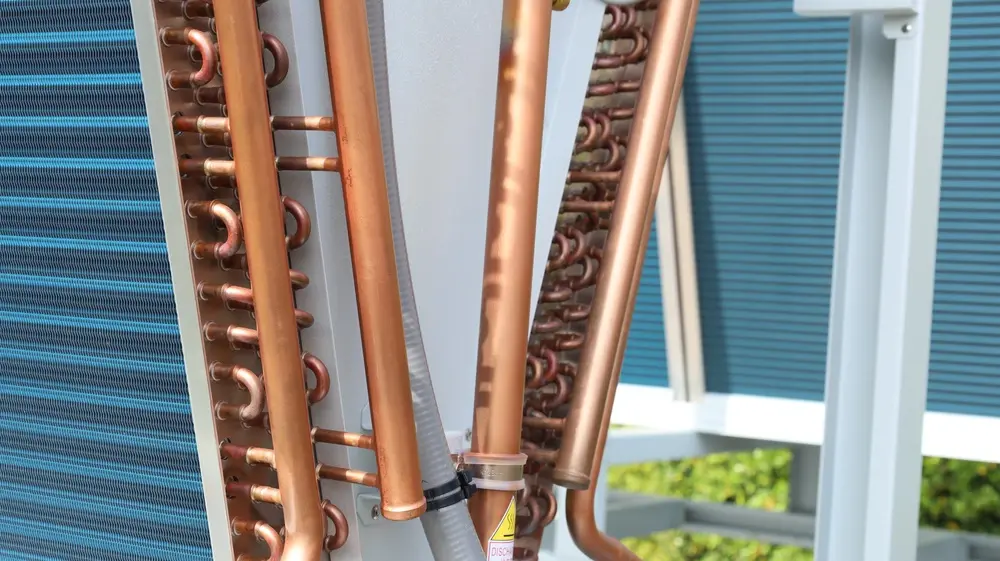
Duct-mounted assemblies can serve individual areas when a central system needs additional conditioning capacity. Condenser coils, by contrast, are commonly located in outdoor equipment where rejected heat can be discharged effectively.
These arrangements appear across healthcare, education, retail, and industrial facilities. The important distinction is not the building category alone, but how its equipment distributes air, handles thermal loads, and accommodates coil installation.
How Does HVAC Coil Construction Vary?
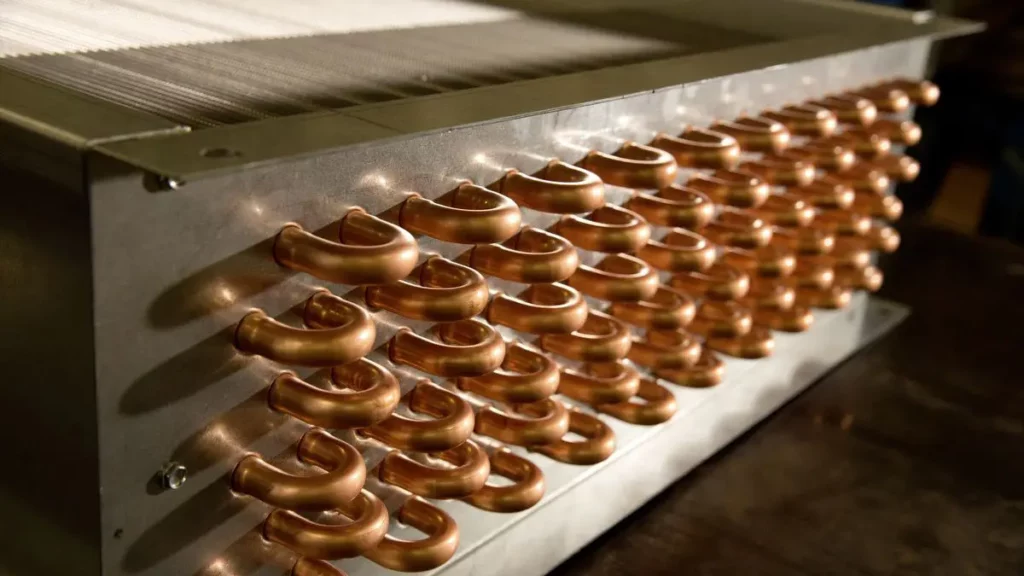
Precision Coils specializes in copper tube construction with fin materials selected for the intended application. Tubes provide fluid passages, while fins increase the area available for exchanging heat with air. Their arrangement varies with coil function, capacity, and equipment constraints.
Construction options may include different tube patterns, fin spacing, headers, connection positions, and casing dimensions. Specify stainless steel casings or specialty fin materials when project conditions call for them. These choices allow a coil to fit an existing assembly or become part of newly designed equipment without assuming every installation needs the same construction.
What Should You Consider When Selecting HVAC Coils?
Choosing an HVAC coil begins with its intended function. A replacement condenser cannot be evaluated using the same operating criteria as a hot water heating coil. Before requesting a selection or quotation, engineers and contractors should establish several project details:
- Operating medium: Identify the refrigerant, water, or steam conditions the coil must accommodate.
- Required performance: Provide heating or cooling capacity, entering conditions, and applicable airflow requirements.
- Physical fit: Confirm face dimensions, available depth, connection locations, and mounting clearances.
- System limitations: Identify relevant pressure drop constraints and equipment operating limits.
- Project type: Specify whether the coil will replace an existing assembly or be integrated into new OEM equipment.
Replacement projects may require field measurements and documentation when original drawings are unavailable. OEM projects offer opportunities to coordinate connections and dimensions earlier in equipment development. In either case, complete specifications reduce uncertainty during design review and purchasing.
Since coil assemblies interact with fans, pumps, compressors, and controls, their performance must be considered as part of the larger equipment design. A component that meets a nominal capacity rating may still be unsuitable if it exceeds available space or creates excessive resistance to airflow. This makes coordination between the coil manufacturer and equipment designer particularly important during specification and eventual field installation.
Custom HVAC Coils from Precision Coils
Precision Coils manufactures standard and custom-built HVAC coils for commercial and industrial equipment. Its team works with engineers, contractors, and OEMs to address dimensional requirements, material preferences, and project schedules. Custom fin configurations, casing options, and crating are available for applications that require them.
Expedited manufacturing lead times of one to 15 days are available for qualifying orders, helping teams respond to replacement needs and planned equipment work. To discuss your project, contact Precision Coils with the equipment details and operating specifications needed for a quotation.