Blog

What is a hot water coil, and why is it used in commercial HVAC equipment? A hot water coil is a hydronic heat exchanger that transfers thermal energy from circulating heated water into an airstream. Installed inside air handling units or duct systems, it raises supply air temperature without generating heat independently. A boiler, heat pump, or other hydronic source heats the water before it reaches the coil.
For mechanical contractors, engineers, OEMs, and facility managers, understanding hot water coils helps with equipment selection, replacement planning, and reliable building operation.
How Does a Hot Water Coil Work?
Heated water enters the coil through a supply connection and travels through a network of tubes. A fan moves cooler air across the tubing and attached fins. Heat passes from the water through the tube walls into the fins and surrounding air, raising the air temperature before distribution.
After releasing heat, the water exits through the return connection and circulates back to the heating source. The system repeats this process as heating demand continues. A modulating control valve can adjust water flow in response to a temperature sensor or building automation command, allowing output to change as conditions shift.
What Are the Main Components of a Hot Water Coil?
Tubes and Fins
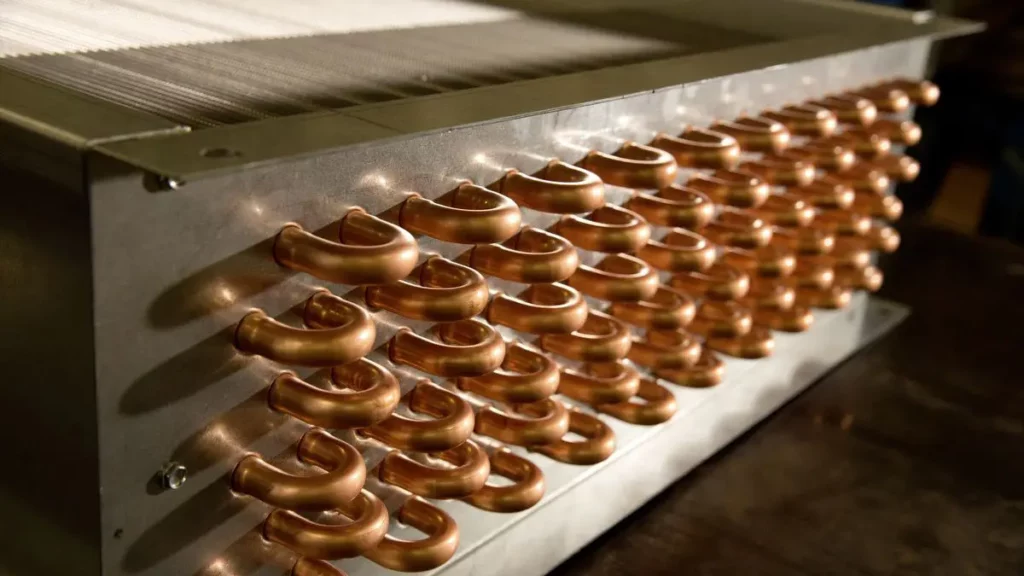
Copper tubes carry water through the assembly, while aluminum fins extend the surface available for transferring heat to the airstream. The fins are mechanically bonded to the tubing to promote effective thermal contact. Their spacing and construction depend on the intended application.
Special fin materials or protective coatings may be specified where environmental exposure warrants additional consideration.
Headers, Circuiting, and Casings
Headers distribute supply water among parallel tube circuits and collect it before the return connection. Circuiting establishes the route water follows through the assembly. Rows describe the depth of the tube arrangement in the direction of airflow.
A casing supports the coil and provides mounting surfaces within an air handler or duct opening. Precision Coils offers hot water coils built to customer requirements, including optional stainless steel casings for suitable projects.
Where Are Hot Water Coils Used in Commercial HVAC Systems?
Hot water coils serve several distinct functions in commercial and industrial buildings. Air handling units use them to warm supply air delivered to occupied spaces. Ventilation systems may use a preheat coil to temper cold outdoor air before it reaches downstream equipment.
Reheat coils adjust air temperature after cooling or dehumidification, supporting applications that require moisture removal without excessively cold supply air. Duct-mounted booster coils can provide additional heating for zones without changing conditions throughout the building.
Offices, hospitals, schools, universities, retail centers, and industrial plants use these arrangements according to their ventilation and process requirements. Hot water coils can operate with conventional boilers, condensing boilers, or appropriately designed heat pump systems.
What Factors Affect Hot Water Coil Sizing and Selection?
A suitable hot water coil must deliver the required heating capacity at the specified operating conditions. Engineers start with airflow, typically expressed in cubic feet per minute, entering air temperature, and the desired leaving air temperature. These values establish the airside heating requirement.
Water conditions are equally important. Entering water temperature and available flow influence how much energy the coil can transfer. Lower-temperature hydronic systems may require different coil configurations than installations supplied with hotter water.
Fin density and coil depth affect available heat transfer area, but additional surface can increase resistance to airflow. Circuiting influences water velocity and waterside pressure drop. Both airside and waterside resistance must remain compatible with the fans and pumps serving the equipment.
Face dimensions, connection sizes, and mounting constraints complete the selection. The coil specifications resource provides a useful reference when reviewing construction requirements. Selecting by dimensions alone risks overlooking capacity or pressure drop limitations. A documented selection also helps purchasing teams compare proposals against the same operating conditions and installation requirements.
What Should You Consider When Installing a Hot Water Coil?
Installation should follow the approved equipment design, including coil orientation, airflow direction, and supply and return connections. Piping must support the required circulation without introducing excessive resistance. Accessible isolation valves allow servicing, while properly located vents help remove trapped air during commissioning.
Coils exposed to freezing outdoor conditions require a coordinated protection strategy. Depending on the system, this may involve controls, circulation provisions, glycol solutions, or other engineered measures. Qualified technicians should verify airflow, water temperatures, valve operation, and heating output before the equipment enters normal daily facility service.
How Do You Maintain a Hot Water Coil?
Maintenance begins with keeping the air passage unobstructed. Dirt on fins can reduce heat transfer and increase airflow resistance, while bent fins may restrict local air movement. Cleaning methods should follow equipment guidance to avoid damaging delicate surfaces.
Technicians should also examine tubes, headers, and connections for leaks or corrosion. Water quality management helps limit deposits that interfere with circulation. Unusual temperature differences or inconsistent heating may indicate trapped air, restricted flow, or control problems requiring investigation. Inspection frequency should reflect the facility environment and operating schedule.
When Is a Custom or Replacement Hot Water Coil Necessary?
Replacement may be appropriate when a coil develops recurring leaks, suffers physical damage, or no longer meets required heating conditions. Older equipment can present additional challenges when original components are discontinued or existing openings limit available replacement choices.
Contractors should document face dimensions, overall casing dimensions, coil depth, connection sizes and locations, and operating requirements before ordering. Precision Coils' coil dimension guidelines can support that process. OEM projects instead allow coil construction to be coordinated with new equipment designs from the outset.
Custom options include fin spacing, fin material, and casing options. For urgent replacement needs, the Quick Build Program offers another path to discuss production timing and project requirements.
Request Custom Hot Water Coils from Precision Coils
Precision Coils manufactures standard and custom copper tube HVAC coils for commercial and industrial applications. With responsive service and expedited lead times of one to 15 days for qualifying projects, the team supports contractors, engineers, and OEMs working with demanding specifications.
Contact Precision Coils to discuss heating capacity, dimensions, material preferences, and delivery needs. Share your project details to request a quote for a new installation or replacement hot water coil.