Blog
What Are Evaporator Coils? A Guide for HVAC Professionals
Evaporator coils are heat exchangers that are made to remove heat from the air as refrigerant evaporates inside them. If you're a mechanical contractor or facility manager, knowing the ins and outs of this process helps you diagnose problems and pick the right replacements.
Quick Snapshot of the Coil's Role
In air conditioners, the evaporator coil absorbs heat from the warm air. Then, the blower circulates cooled air throughout the building. In a typical air-cooled split system, the indoor evaporator works alongside an outdoor condenser coil. During heating, the heat pump coils switch roles.
How an AC Evaporator Coil Works
An expansion device lowers the refrigerant pressure before it ever enters the coil, and the cold liquid-and-vapor mixture absorbs heat as liquid evaporates. Meanwhile, moisture condenses on the surfaces below the air's dew point and drains into a pan.
Refrigerant vapor leaves the evaporator and enters the compressor, which raises its pressure and temperature. It then flows to the condenser, where it releases heat and condenses back into liquid.
Evaporator Coil Components and DX Design
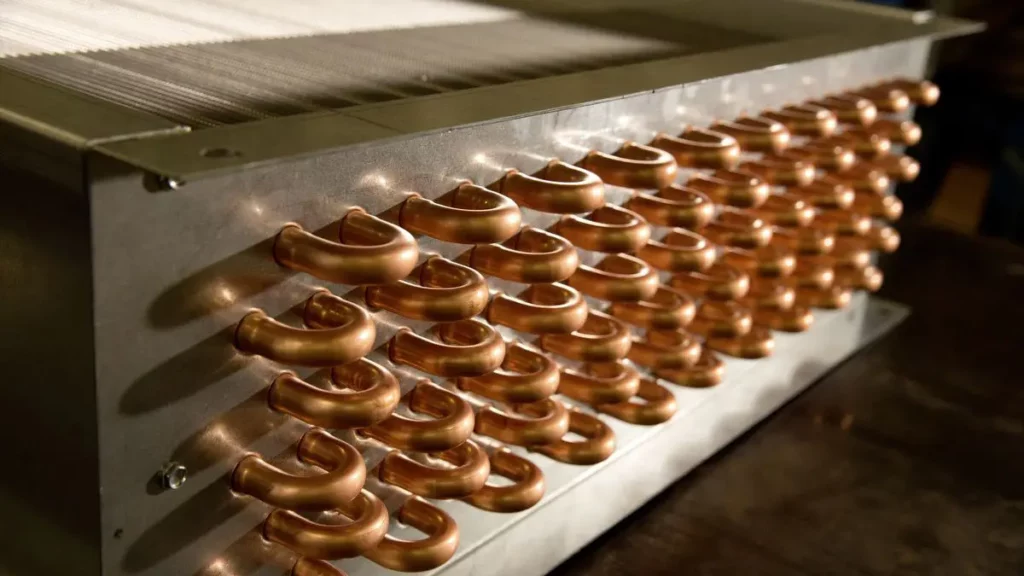
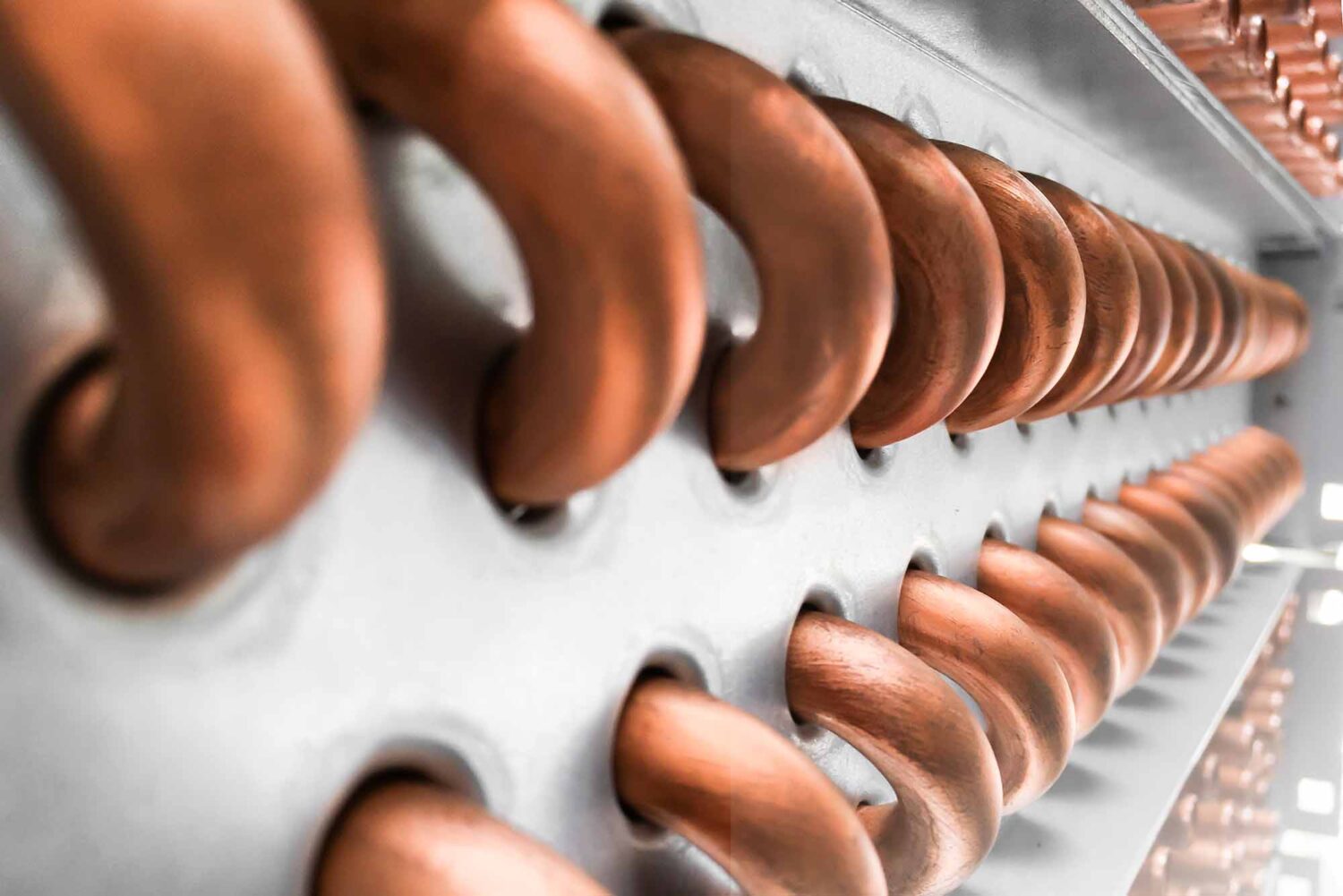
Common evaporator coil components in direct expansion (DX) systems are tubes, fins, headers, distributors, and casings. Copper tubes carry refrigerant, and aluminum fins add heat-transfer area. Copper sweat connections are also seen often.
Cooling mediums differ between DX and chilled water coils; DX designs evaporate refrigerant directly inside the coil, while chilled water designs circulate water from a chiller.
Distributor and Circuiting Considerations
The distributor divides the refrigerant among the circuits. Its nozzle mixes liquid and vapor for even distribution. Correct nozzle sizing balances that flow; circuiting can affect refrigerant velocity, pressure drop, and capacity.
At low refrigerant velocities, confirm oil return to the compressor. Separately, make sure that the condensate pan and drain can remove collected water.
Airflow Configurations and Evaporator Coil Layout
Precision Coils provides horizontal, vertical, and universal airflow configurations. Determine the design for your equipment layout, then follow its marked airflow direction. Importantly, leave enough room for inspection, cleaning, and removal.
Where Is the Evaporator Coil Located?
Typically, you'll find the evaporator coil inside of an air handler or in a cabinet attached to a furnace. Packaged rooftop equipment can house the evaporator and condenser in one outdoor unit. Before ordering a replacement, check the access panels and service clearances.
Common Evaporator Coil Problems
When a coil goes bad, cooling weakens while operating costs climb. Corrosion gradually damages metal and creates refrigerant leaks; oily residue around connections signals a leak that should be tested.
Ice can also be a challenge, caused by restricted airflow or refrigerant problems. Continued operation is risky for equipment, as the melting ice can lead to water damage.
Dirty Evaporator Coil: Causes and Signs
Neglected or improperly fitted filters allow debris to build up on the fins. Dirty evaporator coils can restrict airflow and reduce heat transfer; look out for longer cooling cycles, weak airflow, or rising energy use.
Maintenance and Cleaning Best Practices
For commercial rooftop equipment, quarterly inspections are a good starting point. However, it’s best to tailor the cleaning schedule to the actual buildup and manufacturer instructions. Some sites only need cleaning once or twice a year, while dusty facilities demand regular care. Replace filters according to the loading and specifications, typically every one to three months.
Qualified staff should:
- Inspect the fins, tubes, connections, filters, and drain pans.
- Follow all lockout procedures before cleaning.
- Only use approved cleaners and gentle methods that won't bend fins or damage coatings.
- Clear all drains and check all traps.
- Record the service dates, findings, and readings for maintenance history and warranty documentation.
Additionally, keep all service records in an accessible place so your team can compare the conditions over time. When the same problem returns, detailed service history makes it simpler for technicians to determine the best course of action.
Evaporator Coil Replacement
Replacing an AC evaporator coil is worthwhile when the remaining HVAC system is sound and there’s a compatible replacement available. Recurring leaks, widespread corrosion, and extensive damage all make replacement more practical than repeated repair work. With older equipment, compare the coil replacement cost against that of a complete system upgrade.
Evaporator coil service life varies with operating hours, environmental exposure, maintenance, and application. Evaluate the coil’s condition, performance, and repair history when deciding whether replacement is appropriate.
To estimate the evaporator coil replacement cost, request an itemized quote. Include the coil size, custom materials, labor, refrigerant work, access or lifting requirements, and startup. With warranty coverage, the total can come down.
Selecting Replacement Coils from Precision Coils
Precision Coils crafts DX coils with copper sweat connections and standard or hot gas distributors. Our full options include all-copper construction and protective coatings matched to operating conditions.
Use our PC Select program for support with selection, pricing, and direct ordering; ask about our expedited Quick Build availability. For intertwined designs, our selection software captures your dimensions and performance requirements.
Installation and Compatibility with Condenser Coils
Match the replacement coil to the condensing unit's performance, refrigerant, metering device, and airflow requirements. Professional installation, leak testing, and commissioning all protect your performance and warranty eligibility.
Before installation, check the design pressure, connection locations, and control compatibility. Record these readings to provide a reliable comparison for future service visits.
Enhancing Energy Efficiency
When clean, coils exchange heat more effectively and reduce airflow resistance. Technicians should always confirm airflow, refrigerant charge, controls, and operating temperatures against the design conditions. To curb deterioration over time, select tube, fin, and coating materials for the site's exposure.
Quick Troubleshooting and When to Call a Pro
The easiest place to start is with the thermostat settings, filters, airflow obstructions, or visible drainage problems. If the coil is iced, stop cooling and arrange service as soon as possible; never try to chip the ice away.
For suspected refrigerant leaks, follow the equipment's leak-response procedure and call a qualified technician.
Choose a Coil That Fits Your System
A clean, correctly chosen evaporator coil maintains cooling and humidity control. If you’re in the market for a replacement, review Precision Coils DX evaporator coils or contact the team with your coil dimensions and operating conditions.